Best voice AI infrastructure in 2026
Teams building a product that talks do not lose the month on the prompt. They lose it on formats. Twilio sends mulaw at 8 kHz. Deepgram wants PCM at 16 kHz. ElevenLabs returns audi
By the Mecverse team · 14 Jan 2026 · 8 min read

Key takeaways
- Voice AI infrastructure is the plumbing between the carrier, the transcriber, the model, and the speech engine.
- HZRelay normalizes that to one session and one SDK. It is in private preview.
- Twilio, Deepgram, ElevenLabs, OpenAI, Anthropic, GitHub, and Stripe are the providers the product is built to sit between. That is not a partnership announcement.
- It is not a clinic hotline and it is not InterviewRoom.
The short version
Teams building a product that talks do not lose the month on the prompt. They lose it on formats. Twilio sends mulaw at 8 kHz. Deepgram wants PCM at 16 kHz. ElevenLabs returns audio in its own shape. A browser client wants something else. Webhooks from Stripe and GitHub are a second pile of one-off parsers. The application code becomes a switch statement.
HZRelay is the routing layer for that pile. Voice, token streams, and webhooks share a session model and one SDK. You still own the prompt, the tools, and what the product is allowed to do. It is in private preview, so this guide is about whether you need that layer at all, and which logos are on the path versus merely nearby.
The comparison page for this year is Best voice AI infrastructure in 2026. This essay is the same decision, written out, including which company marks connect and which only sit beside the product.
Book a demo if you want to see HZRelay on your own setup.
The companies on the diagram
Connects to: a channel or a product this workflow actually uses. Sits beside: something teams already pay for, or a name that shows up in the same shortlist. None of these are Mecverse customers.
- Twilio. Connects to. PSTN audio in. Often mulaw at 8 kHz, which is not what the transcriber wants.
- Deepgram. Connects to. Speech to text. Typically wants PCM at 16 kHz.
- ElevenLabs. Connects to. Speech audio back toward the caller.
- OpenAI. Connects to. Token streams that have to reach more than one listener.
- Anthropic. Connects to. The other model path the routing layer is built to sit in front of.
- GitHub. Connects to. Webhooks, so each provider does not get its own parser.
- Stripe. Connects to. The same webhook problem, from payments rather than git.
- Slack. Sits beside. Where the on-call discusses the session. Not the media path.
- Sentry. Sits beside. Where the application error lands. Different product from the audio relay.
The path the logos are actually on
Inbound, the product page names Twilio and Plivo for PSTN, WebRTC and raw WebSocket for browsers, and webhooks such as Stripe and GitHub. Outbound, it names ElevenLabs and Cartesia for speech, Deepgram for transcription, and OpenAI and Anthropic for the model, plus your own app. We have marks here for the ones we can show cleanly. Plivo and Cartesia are named in prose because we are not putting up a broken image. Using the mark means “the relay is built to sit between you and this provider.” It does not mean they certify us, and it does not mean your contract with them changes.
Slack and Sentry are beside the path. They are where humans talk about the session and where the app throws. They do not carry the audio. FlowTux connects to Slack, Sentry, and GitHub for tickets. Do not confuse that GitHub connection with HZRelay’s webhook routing. Same logo, different product, different job.
What you still write
The decision to interrupt, the tool calls, the refusal policy, and the thing you are selling. HZRelay exposes session events you would otherwise scrape out of three dashboards: speech start and end, partial and final transcripts, first token, first audio, a barge-in that flushes the buffer, and an adapter error that names the provider. Latency on the product page is shown as stages on a sample path, from audio received to audio sent. Those sample numbers are an illustration of the stages, not a promise that every call lands on them.
If you will only ever use one carrier and one model, a relay can be unnecessary weight. If you already rewrote the audio callback once because a vendor changed a sample rate, you are the user.
Private preview means a conversation
There is no published monthly price and no self-serve signup. Ask what the preview includes before you put a date on a launch slide. Preview is not general availability with a waiting list caption.
A clinic that wants patients to ask about hours is the WhatsApp assistant. A company that wants candidates to take a first interview is InterviewRoom. Neither should be architected as a HZRelay project unless you are building your own product on top of the voice stack and you mean that.
How to trial it without boiling the stack
One inbound and one outbound. Log one session end to end, including a reconnect and a barge-in. Swap one provider in that diagram only after the first path is dull. If the trial starts with five vendors, you will not know which adapter failed.
Keep the provider invoices in view. The relay does not include Deepgram minutes or Twilio calls. Budget those as you do today.
What to insist on in 2026
In 2026, HZRelay is private preview. The buying question is whether codec and webhook glue is already a recurring engineering cost. If it is, talk to us about one path. If it is not, do not invent a platform project.
Other years: 2025 essay2027 essay
Shortlist
- HZRelay (Mecverse). One session model across voice, tokens, and webhooks Private preview. You keep the product logic. There is no self-serve price on the product page.
- Hand-written adapters (Sits beside). A single provider pair you will never swap Reasonable until the second voice vendor, the second model, or the reconnect bug.
- FlowTux (Mecverse). Internal tickets, not audio Do not buy the helpdesk and expect it to transcode mulaw.
- The model vendor’s own realtime API (Sits beside). Teams who will only ever use one model and one voice stack Fewer moving parts. You will rewrite it if you add a carrier or a second speech engine.
Frequently asked questions
Book a demo
See HZRelay against the workflow in this 2026 guide. If it is the wrong fit, we will say so.
Keep reading
AI
Best voice AI infrastructure in 2027
Teams building a product that talks do not lose the month on the prompt. They lose it on formats. Twilio sends mulaw at 8 kHz. Deepgram wants PCM at 16 kHz. ElevenLabs returns audi
13 Oct 2026 · 8 min read
AI
AI Chatbots for Business Websites and WhatsApp: How to Scope One
What an AI chatbot on your website or WhatsApp does well, where it fails, how to scope FAQs, lead capture and human handoff, and what drives the running cost.
7 Oct 2026 · 6 min read
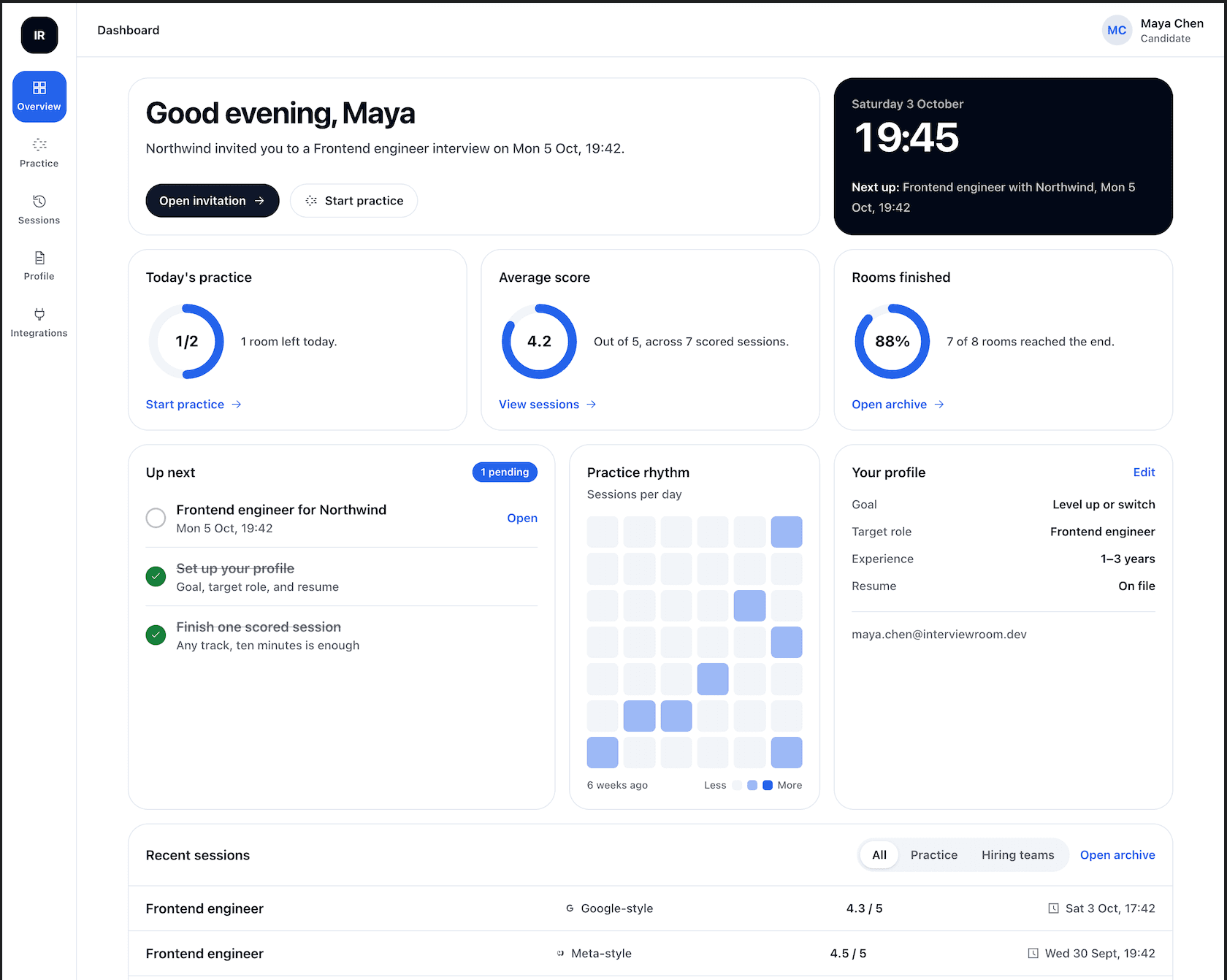
AI
How to Practise Interviews Out Loud (Not Just in Your Head)
Typed answers fall apart when you have to say them. A practical routine for rehearsing interviews out loud, handling follow-ups and reviewing your transcript.
7 Oct 2026 · 7 min read